· The SleepGrids Team · Health Technology · 10 min read
The Science of Blue Light: Why Scrolling at Night Steals Your Sleep
Is blue light really that bad for sleep? Learn how your phone suppresses melatonin for hours, what Night Shift actually does, and what to do instead of scrolling before bed.
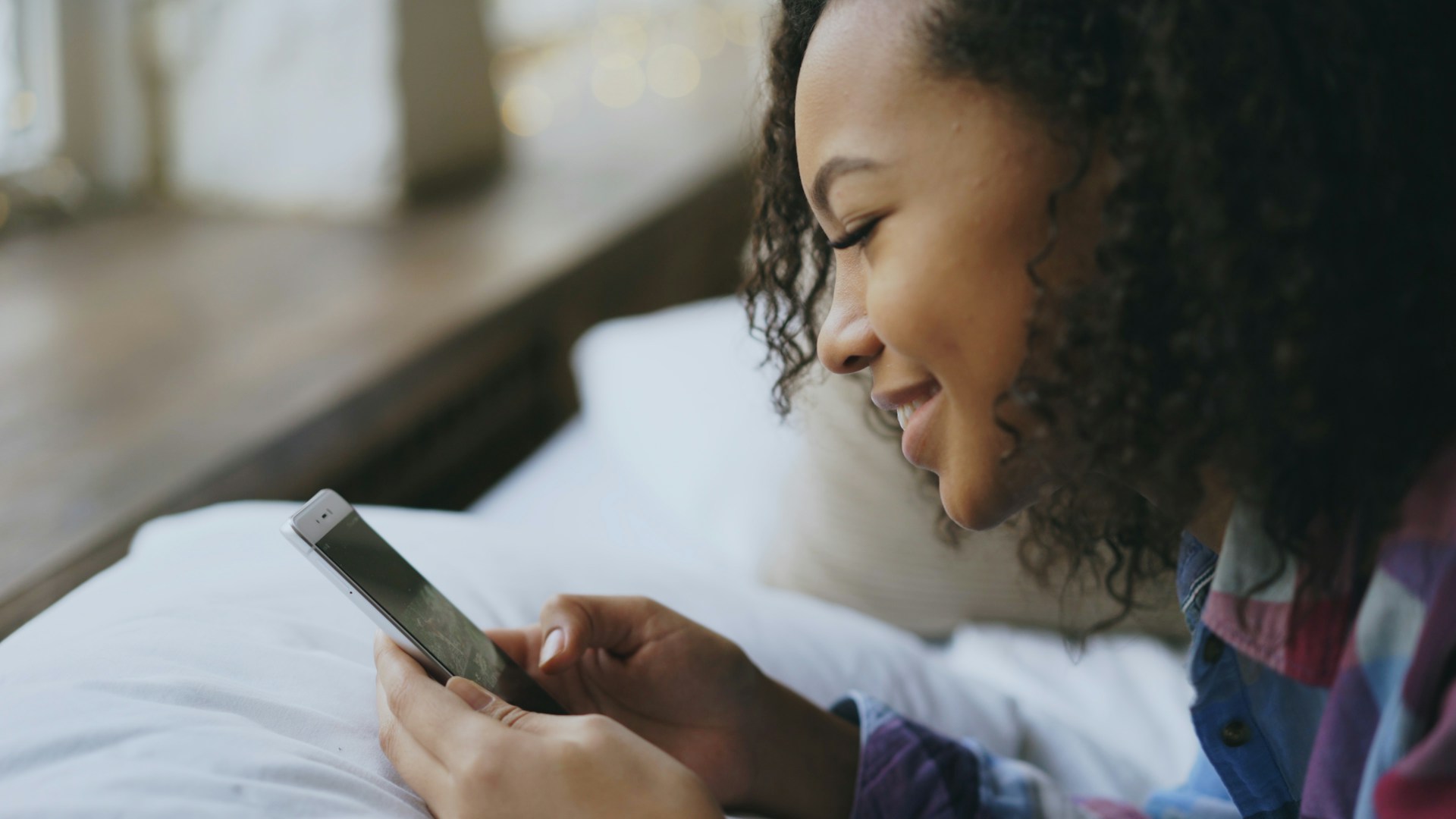
“Stop using your phone before bed.” It’s advice so widely repeated that most people have tuned it out. It sounds like something a parent says, or a health magazine headline, or the kind of advice you nod at and then ignore while scrolling.
But the underlying science is more specific — and more impactful — than the generic warning suggests. This isn’t about screens being bad for you in a vague, hand-waving way. It’s about a very particular biological mechanism involving specialised retinal cells, your brain’s master clock, and a hormone that most people know they need but don’t fully understand.
The Melatonin Kill-Switch
Your eye contains several types of light-detecting cells. The rods and cones you learned about in school handle vision. But there’s a third type — intrinsically photosensitive retinal ganglion cells (ipRGCs) — that serve a completely different purpose. They don’t contribute to vision. They exist specifically to report ambient light conditions to your brain’s master circadian clock: the suprachiasmatic nucleus (SCN) in the hypothalamus.
These cells are maximally sensitive to light in the 460–480nm wavelength range — the blue portion of the visible spectrum. In natural conditions, this range is most abundant in daytime sunlight and virtually absent after sunset. The ipRGCs use this signal to calibrate your internal clock to the solar day: high blue light = daytime, low blue light = night.
When the SCN detects blue light through the ipRGCs, it suppresses melatonin production from the pineal gland. Melatonin is the hormonal signal that initiates the biological cascade toward sleep: lowering core body temperature, reducing alertness, and preparing the conditions for sleep onset. Suppressing it delays all of that.
In a natural, pre-electric environment, this system worked perfectly. The absence of blue light after sunset was a reliable, consistent signal that night had arrived. The problem is that in 2026, you’re looking at a screen emitting concentrated blue-spectrum light at 11 PM, telling your brain’s most ancient timing system that it is noon.
What Harvard’s Research Actually Found
The most frequently cited blue light research comes from a study by Charles Czeisler’s group at Harvard Medical School, published in the Proceedings of the National Academy of Sciences.
The study compared the effects of blue-enriched light versus green light on melatonin suppression and circadian phase shifting. The findings were striking:
- Blue light suppressed melatonin for approximately twice as long as green light of comparable brightness.
- Blue light shifted the circadian rhythm by roughly twice as much as green light — delaying sleep timing by up to 3 hours in some subjects.
- The effects were dose-dependent: more exposure, greater suppression and phase delay.
In practical terms: an hour of phone use before bed doesn’t just delay your melatonin by an hour. For some people — particularly those with higher ipRGC sensitivity — it can push the biological sleep window back by 2–3 hours, even if they managed to fall asleep at their normal time. This melatonin suppression and circadian phase shift is a key contributor to schedule drift, which is why understanding how to fix your sleep schedule often starts with controlling evening light exposure.
This is also why early morning light exposure matters so much from the other direction. The same ipRGC system that responds to evening blue light as a sleep suppressor responds to morning sunlight as a sleep-cycle anchor. Getting bright light in the first 30 minutes of waking calibrates your circadian phase, making evening melatonin onset more reliable and predictable.
The Engagement Problem (Worse Than the Light)
Blue light suppression is well-documented. But most sleep researchers increasingly argue that it isn’t even the primary mechanism by which phones disrupt sleep. The content problem may be larger.
Social media, news feeds, messaging apps, and video content are explicitly engineered for engagement — meaning they are designed, with considerable technical sophistication, to maintain your attentional arousal. Every notification, every scroll, every algorithmically served piece of content triggers small dopamine responses that keep your brain in an active, reward-anticipating state.
This is neurologically incompatible with sleep. Dopamine is an alerting neurotransmitter. News and social content also frequently triggers low-grade cortisol responses — mild anxiety, social comparison, FOMO — that further elevate arousal.
Night mode on your phone reduces the blue-light component. It does not reduce the dopamine-cortisol-arousal component. This is why studies on screen time and sleep find that even when blue light is controlled for, late-night phone use is still associated with delayed sleep onset and reduced sleep quality.
Do Blue Light Glasses Actually Work?
Blue light glasses have become a substantial market, and the evidence for them is genuinely mixed — a fact that their marketing materials understandably tend not to highlight.
Some studies show that blue-light-blocking glasses worn in the 2–3 hours before bed improve melatonin levels and sleep onset latency. A systematic review published in Ophthalmic & Physiological Optics found that blue-blocking glasses had a small but consistent positive effect on sleep quality in studies using subjective measures.
However, other well-controlled studies found minimal effects, particularly when compared to simply reducing screen time. The most reasonable interpretation of the current evidence: blue light glasses may provide a modest benefit, but they are substantially less effective than avoiding bright screen exposure entirely in the pre-sleep period.
If wearing blue light glasses helps you remember to wind down your screen use earlier, they may provide indirect benefit through that behavioural pathway. If you’re treating them as a permitting device — as permission to use your phone as usual right up until you want to sleep — the evidence doesn’t support expecting a meaningful sleep benefit.
What Night Shift / Night Mode Actually Does
Apple’s Night Shift and equivalent “warm mode” settings on Android shift the screen’s colour temperature warmer — reducing blue-spectrum output and increasing yellow and red wavelengths. It’s the same principle as dimming a lamp: less intense light, less stimulating wavelength.
Research on Night Shift specifically has found mixed results. A study published in Sleep Health found that Night Shift had no significant effect on sleep quality compared to regular screen use — largely because the cognitive arousal from content remained constant. A different study found modest improvements in melatonin levels when Night Shift was combined with reduced screen brightness.
The most honest summary: Night Shift is better than nothing, but it is not equivalent to not using your phone. It addresses the wavelength problem while leaving the content-engagement problem entirely intact.
What to Do Instead
If the goal is protecting melatonin onset and avoiding cognitive arousal before bed, the practical hierarchy looks like this — from most to least effective:
1. No screens 60 minutes before bed — This is the gold standard. It addresses both the blue light mechanism and the content-engagement mechanism simultaneously.
2. Physical book reading — Reading a physical book (as opposed to a tablet or e-reader with a backlit screen) is associated with faster sleep onset in multiple studies. It occupies cognitive focus without blue light or interactive stimulation.
3. Low-stimulation audio — Podcasts, audiobooks, or calm music at low volume with your phone face-down and Night Shift enabled. The screen isn’t involved; your attention is lightly engaged without dopamine-loop stimulation.
4. Dim-screen habit logging — Brief, intentional app use (checking off your day’s habits, logging sleep quality) at minimum brightness, followed immediately by putting the phone down. The key is brevity and intentionality, not passive scrolling.
5. Night Shift + reduced brightness + time limit — If avoiding screens entirely isn’t realistic in the short term, this combination is meaningfully better than unrestricted use. But treat it as a bridge to reducing screen time, not as a permanent solution.
The deeper point is one worth sitting with: your brain needs a genuine transition window between the stimulation of the day and the rest of sleep. Screens fill that window with precisely the wrong kind of input. Something as simple as 45 minutes with a book — a habit our grandparents maintained without a second thought — may be one of the most effective sleep interventions available.
Managing blue light is one important lever, but improving overall sleep quality requires a more holistic approach that accounts for multiple factors: wind-down timing, bedroom environment, consistent sleep schedules, and the cumulative effect of daytime habits on evening alertness.
Morning Blue Light: The Other Side of the Equation
It’s worth noting, because the blue light conversation is so often framed in purely negative terms, that blue light has an essential and beneficial role when it arrives at the right time.
Morning bright light — ideally sunlight, but bright artificial light if necessary — activates the same ipRGC pathway that evening light disrupts, but in the opposite direction: it anchors your circadian phase, suppresses residual melatonin, promotes the cortisol awakening response that generates genuine morning alertness, and calibrates the timing of your evening melatonin onset.
People who get consistent morning light exposure — even 10–15 minutes — typically find that their evening wind-down becomes easier and more consistent. The circadian system runs more precisely when it has a clear morning signal to lock onto.
This is one of the best arguments for leaving your phone on the charger in the morning rather than reaching for it the moment you wake up. Get outside first. Give your ipRGCs what they actually need.
Frequently Asked Questions
Does blue light actually suppress melatonin significantly? Yes. Harvard Medical School research found that blue light suppresses melatonin for roughly twice as long as green light and shifts circadian rhythms by twice as much. Evening exposure from screens can delay melatonin onset by 1–3 hours, directly pushing back the biological window for sleep initiation.
Do blue light glasses help with sleep? The evidence is mixed. Some studies show blue-light-blocking glasses improve sleep onset and melatonin levels; others show minimal effect. The stronger evidence suggests that screen content — stimulating apps, social media, news — is more disruptive to sleep than blue light wavelength alone. Glasses help; not using screens helps more.
Is the Night Shift / warm screen mode on iPhone effective? Partially. Night Shift reduces blue light emission but does not eliminate it and does not address cognitive stimulation from content. Studies show a modest improvement in melatonin levels but not a full restoration. Avoiding screens entirely for 60 minutes before bed remains the most evidence-backed approach.
What can I do instead of using my phone before bed? Evidence-backed alternatives include: reading a physical book (associated with faster sleep onset), light stretching or yoga, journaling, listening to calm audio at low volume, or a brief habit log on minimum brightness. The goal is low cognitive stimulation combined with low light intensity.
Is morning blue light exposure also harmful? No — morning blue light is actually beneficial. It suppresses residual melatonin, triggers the cortisol awakening response for healthy wakefulness, and calibrates your circadian clock for the day. The problem is exclusively evening exposure. Getting 10–15 minutes of natural morning light is one of the most impactful sleep hygiene habits available.
Download SleepGrids for a better evening routine — set a “Digital Curfew” habit, check it off each night, and see how consistently protecting your melatonin window changes your sleep grid. Free to download.