
· The SleepGrids Team · Sleep Science · 9 min read
The Best Time to Go to Sleep (According to Science)
There's no universal magic bedtime. But there is a right one for you — determined by your chronotype, your wake time, and your circadian rhythm. Here's how to find it.
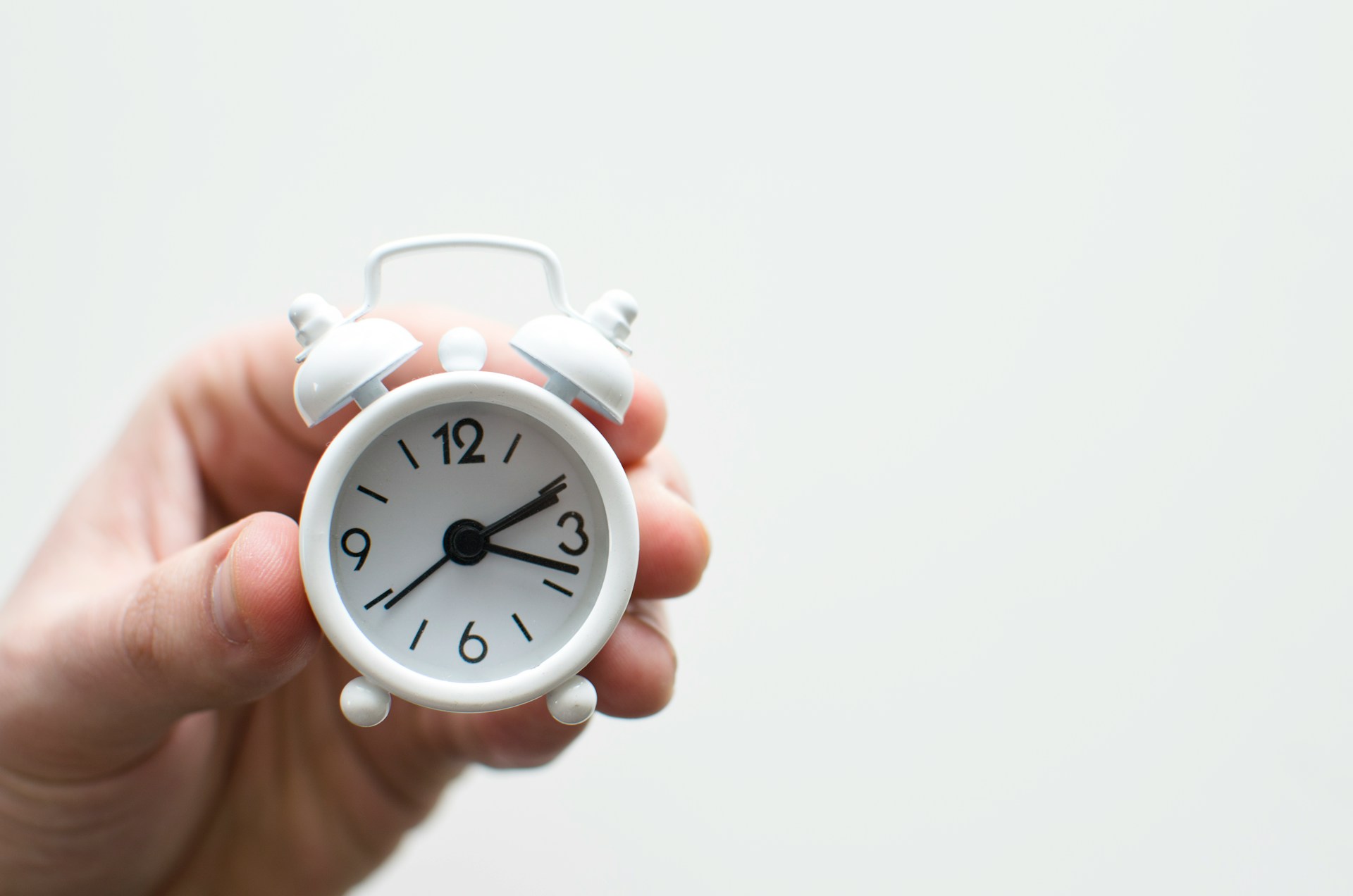
The idea of a universal “best bedtime” — 10pm, or some other specific hour — is one of the most persistent oversimplifications in sleep advice.
The right time for you to go to sleep is not a fixed number on the clock. It’s the intersection of your biology, your wake time, and your consistency. Getting these aligned is more valuable than any particular bedtime. Missing any one of them largely cancels out the others.
Here’s how the science explains what determines your optimal sleep timing — and how to find yours.
How Your Body Decides When to Sleep
Sleep timing is governed primarily by two interacting biological systems:
Process S: Sleep Pressure
As you move through the day, a chemical called adenosine accumulates in the brain as a byproduct of neural activity. The longer you’ve been awake, the more adenosine has built up, and the stronger the physiological drive to sleep. This is called sleep homeostatic pressure — and it’s the reason you feel sleepier as the day goes on and why going to bed too early (before enough pressure has built) can leave you lying awake.
Process C: The Circadian Clock
Your internal circadian clock runs on roughly a 24-hour cycle and regulates the timing of dozens of physiological processes — including when melatonin rises and when core body temperature drops, both of which are prerequisites for sleep. The clock is primarily set by light exposure, particularly morning light that anchors the timing of your cycle each day.
Your ideal sleep window is where these two processes converge — when sleep pressure is high enough and your circadian phase is in its sleep-promoting zone simultaneously. For most people on a natural light cycle, this convergence happens in the evening hours. The exact timing depends on your chronotype.
What Is a Chronotype and How Do You Know Yours?
Chronotype is your biological sleep timing preference — and it’s largely determined by genetics, not habits or lifestyle choices.
Research by Dr. Till Roenneberg at Ludwig Maximilian University, based on analysis of over 500,000 people across multiple countries, established that chronotypes are distributed across a roughly 4–5 hour range in the population. The metric he used — midpoint of sleep on free days — reveals that some people naturally sleep 11pm–7am, while others naturally sleep 2am–10am, and everything in between.
Your chronotype is real, physiological, and only partially adjustable. Someone at the late end of the chronotype spectrum doesn’t prefer to stay up late by choice; their melatonin onset is later, their temperature rhythm peaks later, and the physiological conditions for sleep onset don’t arrive until later in the evening.
Chronotype also shifts across a lifetime:
- Children tend toward early chronotypes
- Chronotype shifts progressively later through adolescence, peaking in the late teens and early 20s
- It gradually shifts earlier again through adulthood
- By the 50s and 60s, most people have returned to an earlier chronotype than in their 20s
To get a rough sense of your chronotype, the simplest method is the “free day” test: on days when you have no alarm and no obligations, what time do you naturally fall asleep and wake up? After a few nights of true freedom from alarm clocks, your natural midpoint of sleep is a reliable indicator of your chronotype.
Working Backwards From Your Wake Time
Once you know your natural chronotype and your required wake time (for work, children, or commitments), the optimal bedtime becomes a simple calculation.
Most adults need 7–9 hours of sleep. A useful practical range is 7.5–8 hours — which also aligns with five complete 90-minute sleep cycles, reducing the chance of waking mid-cycle (which is what causes grogginess).
Simple calculation:
- Required wake time: 6:30am
- Target sleep: 7.5 hours (5 cycles)
- Target bedtime: 11:00pm
This is your target sleep onset time — the time you should be in bed, lights out, and trying to sleep. Build in a 15–30 minute wind-down buffer before this if you need time to fully settle.
If your natural chronotype suggests a sleep midpoint that would require you to sleep past your wake time, you’re facing a form of circadian misalignment — what Roenneberg called “social jet lag.” The morning feels brutal not because you’re lazy but because your biology hasn’t reached its sleep midpoint. For many late chronotypes in 9-to-5 schedules, this is a chronic condition. The most effective adjustment strategies are morning bright light exposure (to advance the clock) and avoiding bright light in the evenings (to prevent further delay). Our guide to fixing a broken sleep schedule covers these approaches in detail.
Why Consistency Matters More Than the Exact Time
Here’s the most counterintuitive finding in sleep timing research: the regularity of your sleep schedule matters more than the specific time you choose.
A person who consistently sleeps from midnight to 8am, seven days a week, will generally have better sleep quality, mood, and daytime function than a person who sleeps from 10pm to 6am on weekdays but 1am to 9am on weekends — even though the latter sounds more “proper.”
The reason is that irregular sleep timing creates recurring circadian disruption. Your circadian clock learns to anticipate sleep at consistent times — when those times shift significantly, your body is essentially experiencing a version of jet lag every Monday morning.
Research published in Scientific Reports found that college students with more irregular sleep patterns had lower GPA and more disrupted circadian rhythms than those with consistent timing — even when controlling for total sleep duration. The consistency of the pattern, not the hours on the clock, drove the outcome.
Practical implication: pick a bedtime and wake time you can actually maintain, including weekends. A slightly later consistent schedule that you stick to every day beats an earlier “ideal” schedule you regularly deviate from. Tracking your sleep timing over weeks in SleepGrids makes it easy to see how consistent you actually are — and the visual grid immediately reveals whether irregular timing correlates with your worse sleep quality days. The relationship between schedule consistency and how to improve your overall sleep quality is one of the most visible patterns in the data.
How to Reset or Shift Your Sleep Timing
If your current sleep timing is misaligned — you’re a night owl forced to wake early, or you’ve drifted later over time — there are two primary levers:
Morning bright light exposure. The most powerful circadian anchor is light in the first 30–60 minutes after waking. Outdoor light (even on a cloudy day) is ideal — roughly 10,000 lux versus 200–500 lux typical indoors. Morning light advances the circadian clock, gradually shifting sleep timing earlier. Ten to fifteen minutes of outdoor exposure within an hour of waking is enough to produce a meaningful shift over 1–2 weeks.
Evening light reduction. Bright overhead lights and blue-spectrum screens in the evening delay the circadian clock by suppressing melatonin onset. Dimming your environment, using warm-toned lights, and reducing screen brightness from 8pm onward complements morning light exposure and produces a combined anchoring effect on sleep timing.
Consistent wake time as the primary anchor. The most reliable tool for shifting sleep timing is fixing your wake time and holding it regardless of when you fell asleep. Sleep pressure will build through the day, and within 1–2 weeks, your sleep onset will shift earlier to align with a fixed wake time.
For caffeine lovers: the timing of your last coffee affects your ability to fall asleep at your target time. Caffeine’s half-life of 5–7 hours means coffee at 3pm leaves half its caffeine active at 8–10pm. Our caffeine and sleep guide explains how to adjust your caffeine cutoff to support your target bedtime.
Frequently Asked Questions
What is the best time to go to sleep? There’s no universal answer — it depends on your chronotype and your wake time. The most useful approach is to count backwards from your required wake time, allow 7.5–8 hours, and target that as your sleep onset time. More important than the exact time is consistency: the same bedtime and wake time every day significantly outperforms an “ideal” bedtime that varies by 1–2 hours across the week.
Is it better to sleep at the same time every night? Yes — strongly. Consistent sleep timing anchors the circadian clock, improves sleep onset speed, and produces measurably better sleep quality over time compared to variable schedules with the same average duration. The circadian system learns to anticipate sleep at consistent times and prepares the hormonal and thermal conditions for it.
What happens if you go to bed too early? If you go to bed before sufficient sleep pressure has built and before your circadian phase has reached its sleep-promoting window, you’ll lie awake — which can worsen sleep anxiety and weaken the learned association between bed and sleep. The best bedtime is the one at which you naturally feel genuinely sleepy, not just tired or bored.
Can you train yourself to be a morning person? Partially. Morning light exposure, consistent early wake times, and reducing evening light can shift a late chronotype earlier by 1–2 hours over several weeks. However, the underlying genetic chronotype doesn’t fully change — you’re narrowing the misalignment, not reversing your biology. People at the extreme late end of the chronotype range may find that their best sustainable sleep window is later than conventional schedules allow.
Does your best sleep time change as you age? Yes. Chronotype shifts progressively later through adolescence (which is why teenagers genuinely struggle to wake early), then gradually earlier through adulthood. Most people in their 50s and beyond find they naturally feel sleepy earlier than they did in their 30s and 40s. This is a well-documented biological shift, not a lifestyle change.
Should your weekend bedtime match your weekday bedtime? Ideally yes — within about an hour. Significant weekend bedtime shifts (2+ hours later than weekdays) create what researchers call “social jet lag,” which produces the groggy Monday morning feeling and cumulates over time into measurable health and cognitive effects. If you’re chronically under-sleeping on weekdays and trying to catch up on weekends, the better solution is to adjust your weekday bedtime rather than using weekends as recovery.
Track your sleep consistency with SleepGrids — log your sleep timing daily and see whether your schedule is more consistent than you think. The visual grid makes irregular patterns immediately obvious. Free on iPhone.