· The SleepGrids Team · Tutorials · 9 min read
Sleep Hygiene: 7 Science-Backed Habits for Better Rest (Complete Guide)
Learn the 7 sleep hygiene habits that reset your circadian rhythm in one week. Simple, science-backed steps — no supplements, no gadgets, no willpower required.
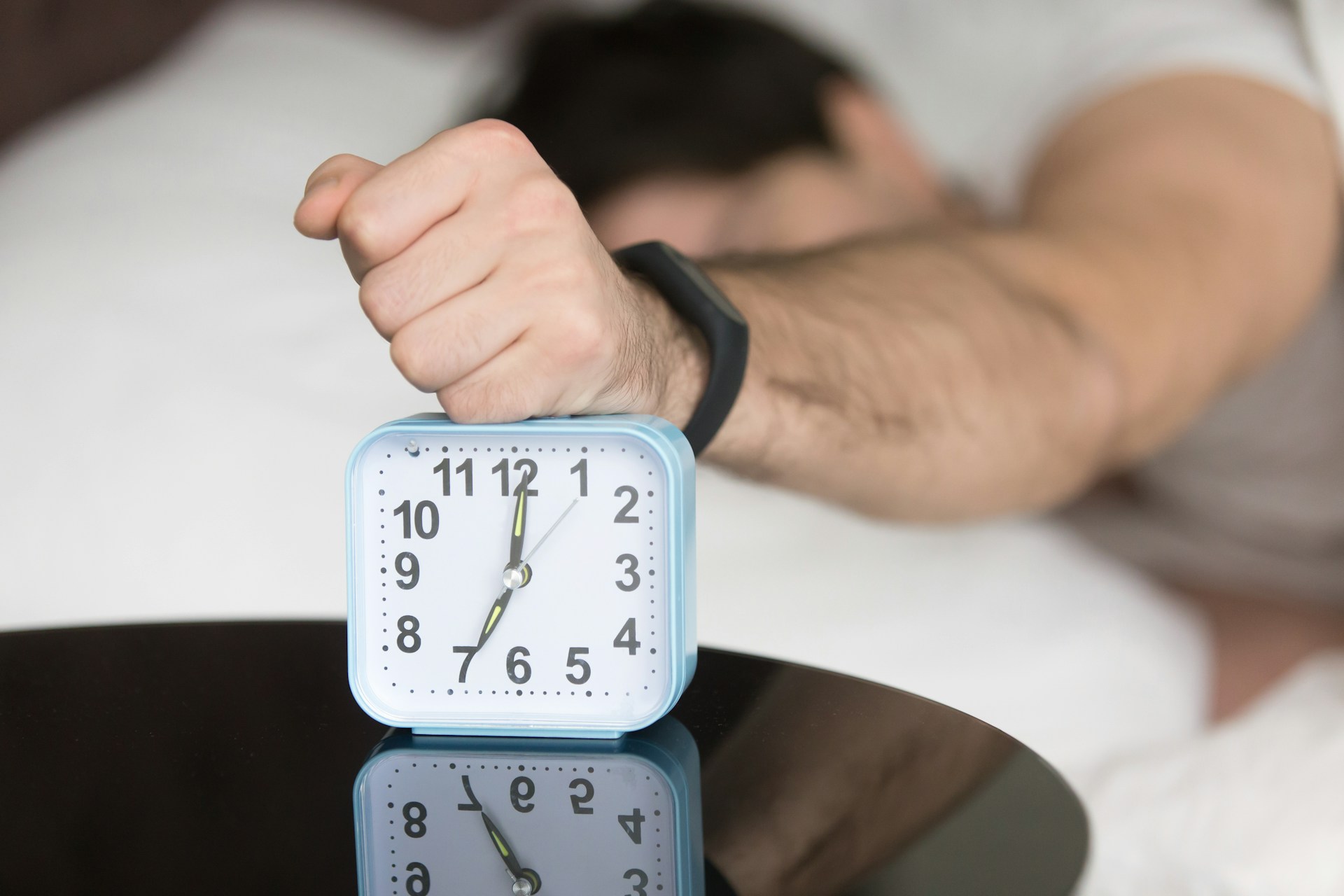
“Sleep hygiene” sounds clinical — like something a doctor says before handing you a pamphlet. But strip away the jargon and what you have is one of the most practical, evidence-backed frameworks for fixing your sleep without medication, supplements, or expensive gadgets.
The concept is simple: your body wants to sleep well. Most of the time, it’s your environment and habits getting in the way. Sleep hygiene is the process of removing those obstacles, one by one, until your natural sleep drive can do its job.
This guide walks you through a 7-day challenge designed to reset your internal clock and build the habits that support genuinely restorative rest.
What Is Sleep Hygiene — and Why Does It Matter?
Sleep hygiene refers to the collection of daily habits and environmental conditions that promote consistent, restorative sleep. The term was coined in the 1970s by sleep researcher Peter Hauri, who observed that most people with chronic sleep difficulties weren’t suffering from a medical disorder — they were simply doing things, often unknowingly, that made quality sleep harder to achieve.
Decades of subsequent research have confirmed that sleep hygiene interventions are effective for a significant proportion of people with insomnia. Importantly, good sleep hygiene forms the foundation of Cognitive Behavioural Therapy for Insomnia (CBT-I) — widely regarded as the most effective first-line treatment for sleep problems before any medication is considered.
The reason it works isn’t mysterious. Your sleep is governed by two interacting biological systems: the circadian rhythm (your internal 24-hour clock) and sleep pressure (the accumulation of adenosine, a sleep-promoting chemical, throughout the day). Sleep hygiene habits work by protecting and amplifying both systems rather than fighting against them.
The 7-Day Sleep Hygiene Challenge
Each day introduces one habit. By day 7, you’ll have a complete, evidence-based routine — and a week of logged data to see how each change affects your sleep quality.
Day 1: Set an Anchor Wake Time
Choose a single wake-up time and commit to it every day — including weekends. This is, by a wide margin, the highest-leverage sleep hygiene intervention available.
Here’s why: your circadian rhythm is anchored by your wake time, not your bedtime. When you wake at a consistent hour, your body builds a predictable rhythm for releasing cortisol (morning alertness), dropping core temperature (sleep onset), and releasing melatonin (sleep signal). Sleeping in on weekends shifts this anchor and creates what researchers call “social jet lag” — the same biological disruption as crossing time zones, with measurable impacts on mood, metabolism, and cognitive performance.
The discomfort of early alarms on weekends is temporary. Within 10–14 days of consistent wake times, most people notice that falling asleep in the evening becomes easier, almost automatically. For more detailed strategies on establishing and maintaining a consistent sleep schedule, read our guide to fixing your sleep schedule.
Day 2: Get Morning Sunlight Within 30 Minutes of Waking
Within 30 minutes of your anchor wake time, step outside for 10–15 minutes of natural light exposure. On cloudy days, stay for 20–30 minutes. This isn’t about vitamin D — it’s about a specific biological signal.
Natural light activates the intrinsically photosensitive retinal ganglion cells (ipRGCs) in your eyes, which send a direct signal to your brain’s suprachiasmatic nucleus (SCN) — the master circadian clock. This signal does two things simultaneously: it stops melatonin production (alertness) and starts the countdown timer for when melatonin will be released that evening. Consistent morning light locks your sleep-wake cycle to the solar day.
This is one of the most underrated sleep improvements available, and it costs nothing.
Day 3: Implement the 2 PM Caffeine Curfew
Stop all caffeine consumption by 2 PM. This single habit produces some of the most dramatic overnight improvements for habitual afternoon coffee drinkers.
Caffeine works by blocking adenosine receptors — the receptors responsible for building “sleep pressure” throughout the day. With a half-life of 5–6 hours, a 200mg coffee at 3 PM still has approximately 100mg active in your system at 9 PM. This doesn’t just make falling asleep harder — it suppresses deep slow-wave sleep even if you fall asleep normally, leaving you physically under-recovered.
If you’re sensitive to caffeine or notice that a 2 PM cutoff isn’t sufficient, experiment with noon. Everyone metabolises caffeine differently based on genetics — particularly the CYP1A2 gene. Tracking your sleep quality against your caffeine timing is the most reliable way to find your personal threshold.
Day 4: Lower Your Bedroom Temperature
Set your thermostat to approximately 18°C (65°F) before sleep. If that’s not possible, open a window, use a fan, or switch to lighter bedding.
Sleep initiation requires your core body temperature to drop by 1–2 degrees Celsius. This thermoregulatory change is a biological prerequisite — your body cannot properly enter deep sleep without it. A room that’s too warm impedes this process, keeping you in lighter sleep stages and causing fragmented wakeups in the second half of the night.
The classic hot bath or shower 60–90 minutes before bed works through the same mechanism: the rapid skin warming draws heat to the body’s surface, and the subsequent cooling when you get out accelerates core temperature drop, reliably speeding sleep onset.
Day 5: Set a Digital Curfew — 45 Minutes Before Bed
Set a “no screens” rule for the 45 minutes before your target bedtime. This means no phone, no tablet, no laptop, no TV.
The sleep disruption from screens is twofold. First, the blue wavelength light emitted by screens suppresses melatonin production — your sleep signal. Second, and arguably more impactful, the content of most screens (social media, news, messages, video) triggers dopamine and cortisol responses that maintain neurological arousal precisely when your brain needs to be winding down.
The 45-minute window is a starting point. Most sleep researchers recommend 60 minutes. If you’ve been a habitual phone-in-bed user, the first few nights will feel difficult — that’s normal. Replace the phone with a physical book, a brief journaling session, or a conversation. Most people are surprised by how quickly the quality of their evenings improves.
You can read more about the specific neuroscience in our post on blue light and melatonin suppression.
Day 6: Condition Your Bed for Sleep Only
Use your bed exclusively for sleep and intimacy. This habit works through a principle called stimulus control — one of the most effective behavioural interventions for insomnia identified in the sleep research literature.
Your brain forms powerful associations between locations and mental states. If you work from your bed, scroll on your phone in bed, watch TV in bed, or lie awake worrying in bed, your brain gradually stops associating the bed with sleep. Over time, getting into bed becomes a cue for wakefulness rather than rest.
The corrective rule: if you haven’t fallen asleep within 20 minutes of lying down, get up. Go to another room and do something quiet and dim — read a physical book, listen to calm audio, fold laundry — until you feel genuinely sleepy. Then return to bed. This feels counterintuitive but consistently outperforms lying in bed and trying harder.
Day 7: Review Your Grid and Identify One Pattern
By Day 7, you’ve been logging your sleep and habits for a week. This is where the investment pays off.
Open your sleep tracker and look at your week as a whole, not day by day. Did the cold room on Day 4 correspond to a greener grid on Day 5? Did the nights you skipped the digital curfew show up differently in your morning quality ratings? Did your mood on the mornings after consistent wake times differ from the mornings after variable ones?
This review isn’t about judgment — it’s about building a personalised picture of what works for your biology. Generic sleep advice tells you what works for most people. Your own grid tells you what works for you.
Building Beyond the 7 Days
The 7-day challenge establishes the foundation. The more durable habits — the ones that produce lasting change — come from consistent tracking that reveals your individual patterns over weeks and months.
Most people find that after 30 days of consistent logging, they understand their sleep in a way no app algorithm could explain. They know which habits move the needle, which ones make no difference, and which unexpected variables they never would have suspected.
For a more comprehensive look at optimizing your sleep beyond the basics, our guide to improving sleep quality explores deeper strategies tailored to individual needs. And if sleep schedule consistency remains a challenge, our post on fixing your sleep schedule provides targeted guidance on realigning your circadian rhythm.
The path to better sleep isn’t paved with supplements or devices. It’s built from small, consistent actions and the self-awareness to know which ones are actually working.
Frequently Asked Questions
What is sleep hygiene and why does it matter? Sleep hygiene refers to the collection of habits and environmental conditions that promote consistent, restorative sleep. It matters because poor sleep hygiene is one of the most common — and most fixable — causes of chronic tiredness and difficulty falling asleep, often addressable without medication.
What is the single most important sleep hygiene habit? Keeping a consistent wake time — even on weekends — is widely considered the highest-impact sleep hygiene habit. It anchors your circadian rhythm and builds sufficient sleep pressure each day, making it progressively easier to fall asleep at the same time each night.
How long does it take for sleep hygiene improvements to work? Most people notice measurable improvements within 7–14 days of consistent changes. The first 2–3 days may feel harder as your body adjusts. By day 7, especially with a consistent wake time and reduced screen exposure, sleep onset and morning energy typically begin to improve noticeably.
Does sleep hygiene work for insomnia? Sleep hygiene alone may not fully resolve clinical insomnia, but it is a core component of Cognitive Behavioural Therapy for Insomnia (CBT-I) — the gold standard treatment recommended by sleep physicians before medication. Most people with mild-to-moderate sleep difficulties see significant improvement from consistent hygiene changes alone.
What bedroom temperature is best for sleep? Research consistently points to 15–19°C (60–67°F) as optimal for most adults. Your core body temperature needs to drop slightly to initiate and maintain deep sleep. A room that’s too warm disrupts this thermoregulatory process and fragments sleep in the second half of the night.
Ready to run your own 7-day reset? Download SleepGrids — free on the App Store — log each day’s habits in 10 seconds, and let your grid show you which changes are actually working.